

PPF for Tesla and other electric cars in Warsaw — why EV paint needs protection from day one
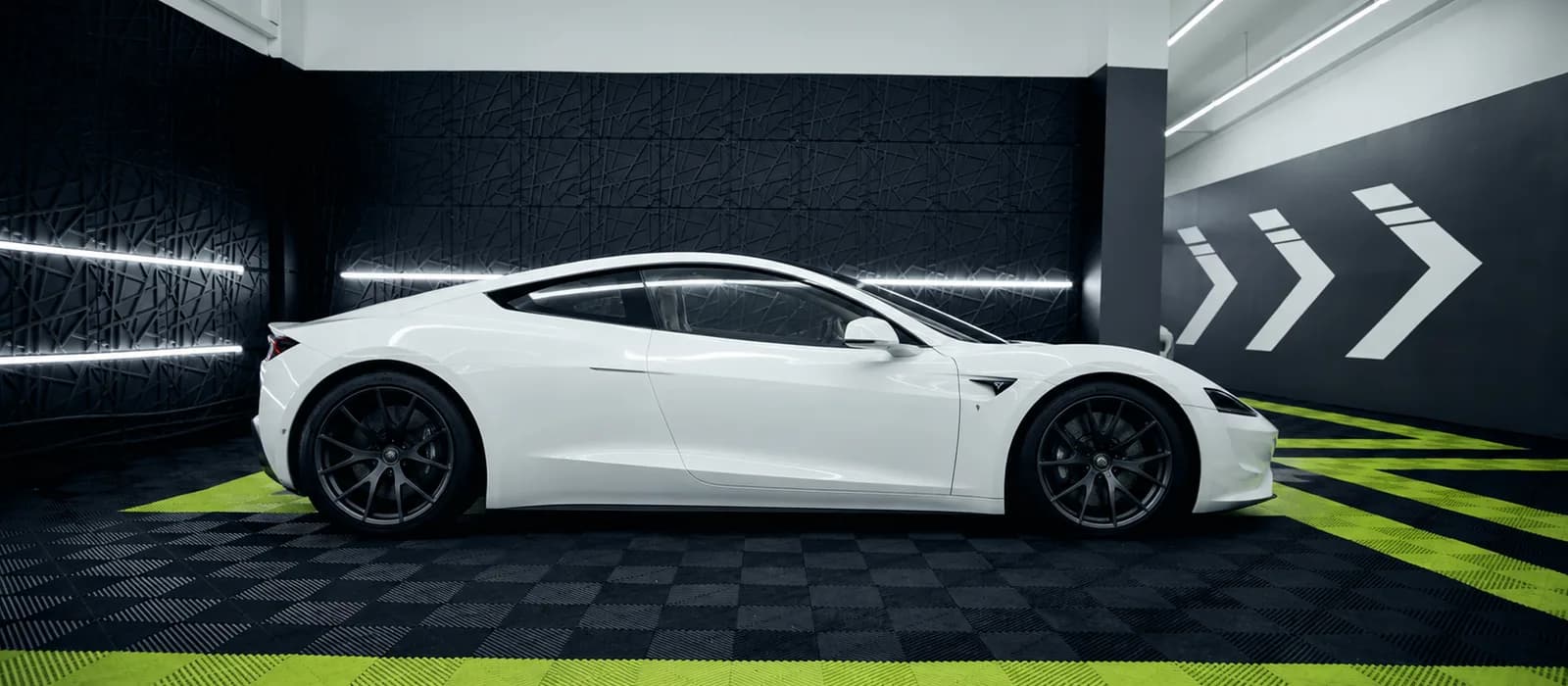
Factory paint on a Tesla and many other electric cars is thinner and softer than on classic combustion-engine cars. Find out why PPF from day one is standard practice, not overkill.
Quick Summary
Key Takeaways
Reading time
9 min read
Location
Warsaw
- •PPF for Tesla and electric cars — quick answer
- •How many microns is Tesla's factory paint?
- •Where these differences come from — and why it's not about one manufacturer
- •PPF or ceramic coating for an electric car?
PPF for Tesla and electric cars — quick answer
- Tesla's factory paint is typically 80–100 microns thick, versus 120–150 microns on many premium combustion-engine brands — a real, measurable difference.
- Pencil hardness around F means a noticeably softer clear coat than the 2H–3H standard used elsewhere.
- PPF from day one is not overkill — it's a direct response to the documented lower durability of factory paint on many electric cars.
- Full Front covers most city driving needs; Full Body makes sense for flagship models and cars with paint that's difficult to repair.
- Ceramic coating alone isn't enough — it protects chemically but won't stop a stone chip on thin EV paint.
A silent electric motor means the driver hears every pebble that hits the bumper — in a combustion-engine car, the engine noise would mask it. That's not the only reason Tesla and other EV owners ask about PPF from day one more often than combustion-engine drivers do. The bigger reason is the paint itself — specifically, its thickness and hardness.
How many microns is Tesla's factory paint?
Independent paint-thickness measurements carried out by detailers and paint-inspection shops put Tesla's coating at roughly 80–100 microns, with some panels measuring noticeably less. For comparison, premium combustion-engine brands (BMW, Mercedes) typically apply 120–150 microns. Hardness compounds the issue: pencil hardness tests — a standard method for rating a paint's scratch resistance — return a result around F, several grades softer than the 2H–3H found on many other brands.
A thinner, softer coat is simple arithmetic: the same pebble, the same branch, the same neighbour's door carelessly opened in a car park leaves a deeper mark on EV paint than on the thicker, harder coating of a combustion-engine car in the same price segment.
Where these differences come from — and why it's not about one manufacturer
EV manufacturers, Tesla leading the way, build cars on a very fast factory cycle to keep up with demand. Shorter time at each paint and curing stage translates into thinner base and clear coat layers. In practice that means more frequent factory defects: orange peel texture, contamination trapped under the clear coat, sanding marks visible under the right light, and a tendency for early chipping before the car has even reached a thousand kilometres.
This isn't a problem specific to one brand. Similar observations apply to other EV manufacturers who, like Tesla, prioritise high production volume and a short factory cycle. The result for the owner is the same: paint that looks great on delivery day but has a smaller protective margin for the years of driving ahead.
PPF or ceramic coating for an electric car?
- ❌ Ceramic coating as the only protection — excellent against UV, acid rain, and bird droppings, but it won't stop a stone chip on thin EV paint.
- ✅ PPF on the exposed panels — bonnet, bumper, mirrors, sills — exactly where the paint's thickness in microns matters most.
- ❌ PPF with no maintenance layer — the film protects against mechanical damage, but without a hydrophobic coating it's harder to keep clean.
- ✅ PPF + ceramic coating together — a physical barrier on the most exposed panels plus chemical protection and easier washing across the whole car. Read more in our PPF vs ceramic coating comparison.
Full Front, Full Body, or Color PPF — what to choose for a Tesla or other EV?
| Scope | When it makes sense for an electric car |
|---|---|
| Full Front | The car mainly drives around Warsaw and on motorways. Covers the bonnet, bumper, headlights, mirrors, and front fenders — the panels most exposed to stone chips in typical city driving. |
| Full Body | Flagship models, cars with paint in a colour or matte finish that's hard to colour-match in a repair, and situations where preserving resale value matters most. |
| Color PPF | A frequent choice for Tesla and other EV owners who want to switch the factory colour to satin or matte while protecting the paint. Requires precise installation — coloured film shows finishing flaws more clearly. |
Indicative Warsaw prices: PPF Half Front from 2,800 PLN, PPF Full Front from 4,000 PLN net, full Full Body wrap from 9,000 PLN net, Color PPF colour change from 12,000 PLN. Final pricing depends on the car model and chosen scope.
The biggest mistakes EV owners make with paint protection
- Putting off the PPF decision — the longer a car drives unprotected, the more swirl marks and chips it collects before the film even goes on.
- Relying on ceramic coating alone — great against UV and chemicals, powerless against a stone flying off the road.
- Choosing the cheapest film without checking thickness and self-healing technology — on thin, soft EV paint, material quality matters even more than on a combustion-engine car.
- Ignoring the paint condition at delivery — some factory defects (orange peel, contamination) only show up under proper lighting; it's worth assessing the paint before the first thousand kilometres, not after.
When should you apply PPF to a new electric car?
The best time is right after taking delivery, before the first longer trip. The later the decision, the more likely the paint has already picked up its first swirl marks and chips, which the film can no longer undo — it can only protect against the next ones. For clients collecting a car straight from the showroom, many Warsaw detailers recommend booking PPF before the car passes a few hundred kilometres on the odometer.
Detailing studios in Warsaw fall into two groups: those that treat PPF as just another item on a price list, and those that actually understand the specifics of EV paint and scope the protection to the model in front of them. One Way Detailing belongs to the second group — during a free consultation we assess your electric car's paint condition and recommend a PPF scope that genuinely matches its needs, not a one-size-fits-all package.
FAQ
Is Tesla's paint actually thinner than other brands?
Yes. Independent paint-thickness measurements taken by detailers and inspection shops put Tesla's factory paint at roughly 80–100 microns, sometimes less in places, compared with 120–150 microns typically used by premium combustion-engine brands. Pencil hardness tests rate it around F, noticeably softer than the 2H–3H standard found on many other brands.
Why do electric cars have thinner paint?
EV manufacturers, including Tesla, build cars on a very fast factory cycle, which favours shorter paint curing times and thinner base and clear coat layers. The result is more frequent factory defects: orange peel texture, contamination trapped under the clear coat, sanding marks, and a tendency toward early chipping.
Is PPF on a new electric car overkill?
No. Given the documented lower thickness and hardness of factory paint on many electric cars, PPF from day one is a reasonable decision, not overkill. The film absorbs stone impacts and minor scratches before they reach the thin factory clear coat.
Full Front or Full Body for a Tesla and other EVs?
Full Front (bonnet, bumper, headlights, mirrors, sills) is enough for cars mainly driven in the city and on motorways. Full Body makes sense for flagship models, cars with a matte finish or a colour that's hard to colour-match in a repair, and whenever preserving resale value matters most.
Is PPF or ceramic coating better for an electric car?
It's not an either-or choice. Ceramic coating protects chemically and makes washing easier, but it won't stop a stone chip. On the thinner, more damage-prone paint of an EV, the most effective approach combines PPF on the exposed panels with ceramic coating across the whole car.
Does Color PPF make sense on an electric car?
Yes, and it's an especially popular choice for Tesla and other EV owners who want to switch the factory colour to satin or matte. Color PPF protects the paint while changing the car's appearance, but it requires very precise installation, since coloured film shows finishing flaws more clearly.
When is the best time to apply PPF to a new electric car?
Right after taking delivery, before the first longer motorway trip. The longer you wait, the more likely the paint has already picked up early swirl marks and chips that the film can no longer undo — it can only protect against the next ones.
Book a PPF consultation for your electric car
If you own a Tesla or another electric car and are weighing up how much paint protection it needs, book a free consultation at One Way Detailing in Warsaw. We'll assess the paint condition, discuss how you use the car, and recommend a PPF scope matched to your specific model — from targeted Full Front to a complete Full Body wrap.
Article topics