

PPF vs ceramic coating — which one to choose for your car?
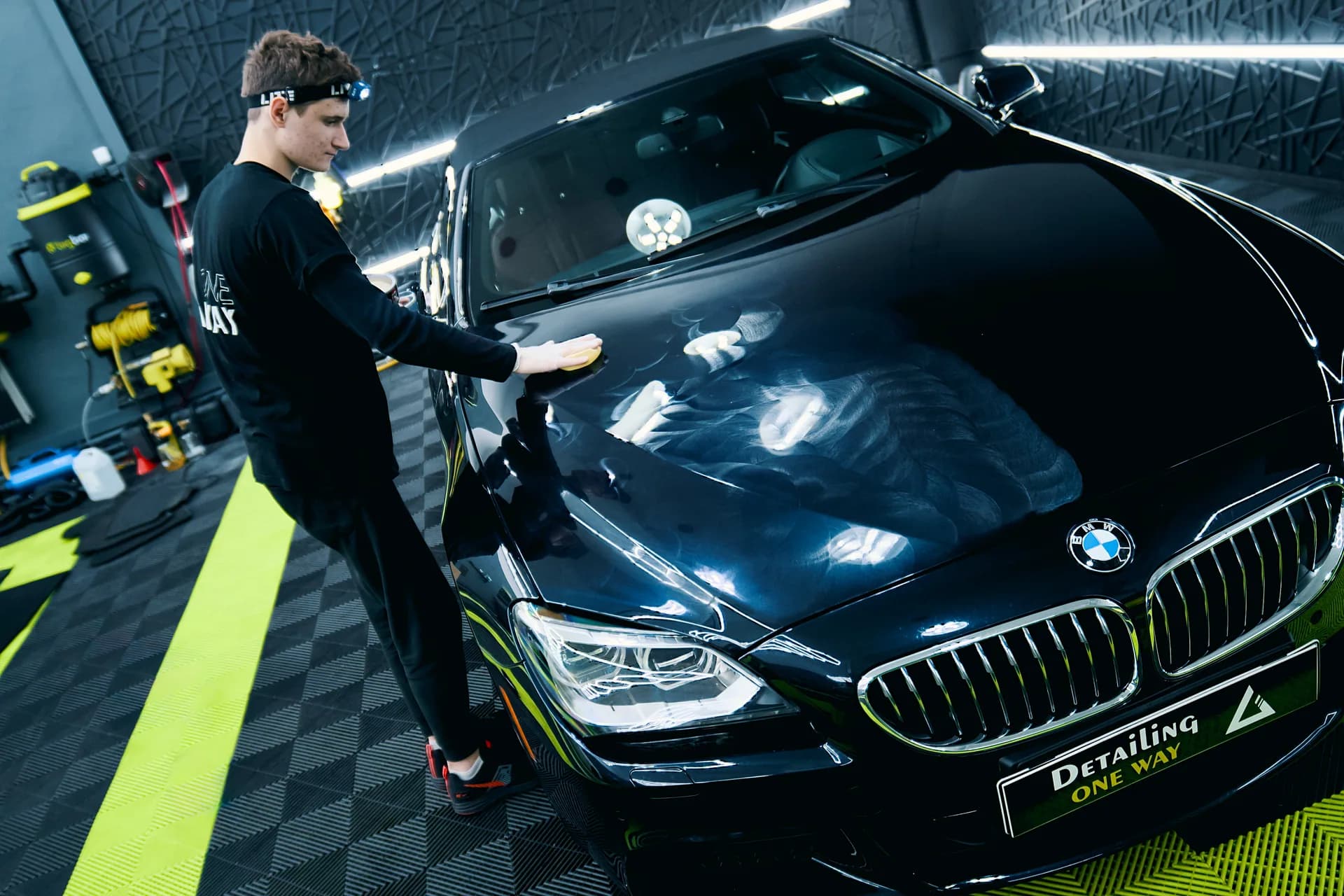
PPF or ceramic coating? We compare the two most effective ways to protect your paint — physical and chemical. Find out what to choose and when combining both makes sense.
Quick Summary
Key Takeaways
Reading time
5 min read
Location
Warsaw
- •PPF vs ceramic coating (quick answer)
- •Two different types of protection — one common goal
- •How does PPF work and how does ceramic coating work?
- •PPF — physical protection
PPF vs ceramic coating (quick answer)
- Choose PPF if you want protection from stone chips, scratches, and everyday road impact.
- Choose ceramic coating if you want gloss, hydrophobicity, and easier washing.
- Combine both if the car is new, premium, or spends a lot of time on motorways.
- Do not confuse these services — ceramic coating does not replace PPF, and PPF does not give the same wash behaviour as a good ceramic coating.
- Fast rule: physical protection = PPF Warsaw, appearance and maintenance = ceramic coating, maximum result = PPF + ceramic coating.
Two different types of protection — one common goal
Both PPF and ceramic coating aim to protect your car's paint. But they do it in completely different ways. Treating them as interchangeable or confusing one for the other is one of the most common mistakes when planning paint protection. Most studios oversimplify this topic because it is easier to sell one package than to explain the difference honestly. That leads to poor decisions: the client expects protection from stone chips and gets only easier washing.
How does PPF work and how does ceramic coating work?
PPF — physical protection
Paint Protection Film is a thick polyurethane film that physically absorbs impacts. A stone flying off the road, a twig, a door ding from a neighbour — PPF stops all of it before it reaches your paint. Premium films have a self-healing property: minor scratches disappear under heat.
Ceramic coating — chemical protection
Ceramic coating forms a hard layer on the paint that protects against chemical attack: acid rain, bird droppings, insects, oils, UV. It also makes washing much easier thanks to strong hydrophobicity — water and dirt simply bead off and roll away.
- ❌ Ceramic instead of PPF, if you want protection from stone chips — ceramic coating will not stop them.
- ✅ PPF Warsaw, if physical protection is the priority.
- ❌ PPF instead of ceramic coating, if your main goal is easier washing and stronger gloss across the whole car.
- ✅ Ceramic coating, if you want better appearance, hydrophobicity, and chemical resistance.
PPF vs ceramic coating — comparison table
| Feature | PPF | Ceramic coating |
|---|---|---|
| Protection against stone chips | Yes (key advantage) | No |
| Protection against scratches | Yes + self-healing | Partial (hardness) |
| Chemical protection (acids, UV) | Yes | Yes (strong) |
| Hydrophobicity / easy washing | Yes | Yes (stronger) |
| Durability | 7–10 years | 4–7 years (premium) |
| Price (car front) | from 2,000 PLN | from 800 PLN (full car) |
| Visibility on paint | Minimal | Invisible |
| Self-healing | Yes (premium PPF) | No |
The most common mistake when choosing
The biggest mistake is assuming that the more expensive service is automatically the better choice. It is not. PPF and ceramic coating solve different problems. If you choose the wrong one, you pay for protection you do not actually need, or you miss the protection you expected to get.
When to choose PPF?
- You have a new car and want to keep the factory paint in perfect condition for years
- You frequently drive motorways or roads with loose gravel
- You have a premium or sports car, or a paint colour that is difficult to repair
- You plan to sell the car in a few years and want to maintain its value
- You have a scratch-sensitive colour (black, navy, dark grey, white pearl)
When to choose ceramic coating?
- You want easier washing and deep gloss for years
- Your car mainly drives in the city — stone chip exposure is low
- You have a used car with already-corrected paint
- Your budget does not allow for PPF but you want solid chemical protection
The best option: PPF + ceramic coating together
This is not upselling — it is genuinely the most effective paint protection package. PPF provides a physical barrier on the most exposed areas (hood, bumper, sills), while ceramic coating applied to the whole car (including on top of PPF) enhances hydrophobicity and simplifies maintenance.
Ceramic coating on PPF also protects the film itself from contamination and makes it easier to wash. The result is a car that practically protects itself.
How does the decision work in practice?
Studios in Warsaw usually fall into two groups: places that sell the same package to every client and places that first analyse how the car is used. The second group includes studios such as One Way Detailing. During a free quote we assess paint condition, driving style, and budget — and only then recommend a specific solution. Not every car needs a full PPF wrap. Sometimes PPF on the front and ceramic on the rest is enough. Sometimes premium ceramic coating alone is perfectly sufficient.
Conclusion: what should you choose?
Choose PPF if you want real protection from stone chips, scratches, and intensive road use. Choose ceramic coating if gloss, hydrophobicity, and easier washing matter most. Choose PPF + ceramic coating if the car is new, valuable, or you want maximum protection and convenience. The key point is simple: do not ask which one is "better". Ask what your car actually needs.
Article topics