

PPF film in Warsaw — what is it and how much does it cost?
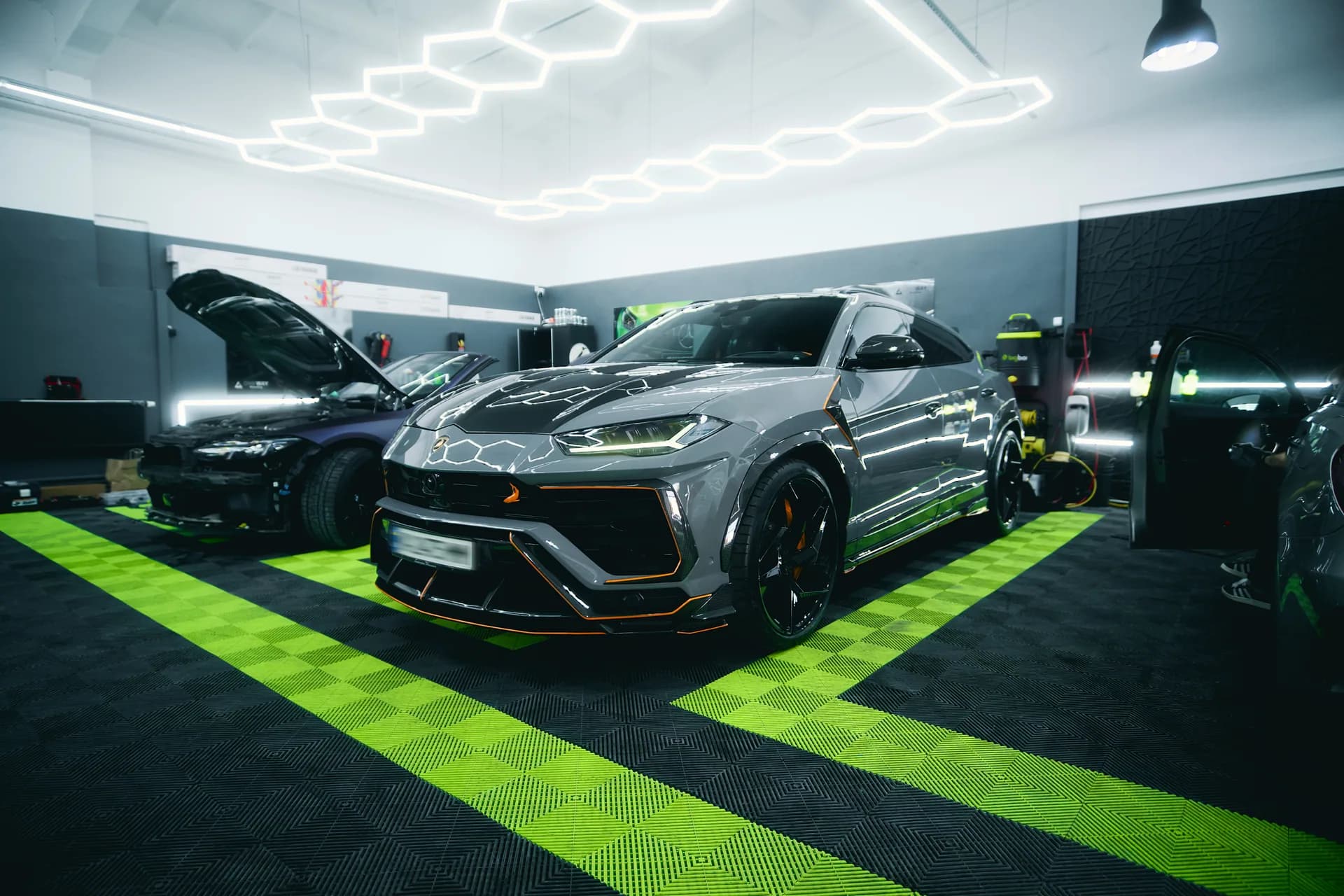
What is PPF, how does self-healing work and how much does installation cost in Warsaw? Find out current prices, protection scope and what to look for when choosing a studio.
Quick Summary
Key Takeaways
Reading time
6 min read
Location
Warsaw
- •PPF film in Warsaw (quick answer)
- •What is PPF and why does it protect better than ceramic coating?
- •Types of PPF film
- •Glossy PPF
PPF film in Warsaw (quick answer)
- PPF makes sense if you want real protection from stone chips, scratches, and intensive road use.
- Full front is enough for most daily-driven cars — it gives the best protection-to-price ratio.
- Full body wrap makes sense for new cars, premium cars, and owners who want factory-condition paint for years.
- Avoid the cheapest offers with no portfolio, no information about the film, and no controlled installation environment.
- Fast decision: if you need physical paint protection, choose PPF Warsaw; if you mainly want gloss and easier washing, ceramic coating alone may be enough.
What is PPF and why does it protect better than ceramic coating?
PPF (Paint Protection Film) is a thick polyurethane protective film that literally absorbs impacts — stone chips, gravel, sand, twigs. Unlike ceramic coating, which acts at a chemical level, PPF creates a physical barrier between your paint and the outside world.
The key feature of premium PPF is self-healing: minor scratches and scuffs disappear on their own under heat from the sun or warm water. The paint underneath stays untouched for years.
- ❌ Ceramic instead of PPF, if you expect protection from stone chips — ceramic coating will not stop them.
- ✅ PPF Warsaw, if you want a real barrier between the paint and the road.
Types of PPF film
Glossy PPF
The most popular option. The film is transparent and preserves the original paint colour and gloss. Virtually invisible after installation.
Matte PPF
Changes the car's finish to a satin-matte look — a great option for owners of light-coloured cars who want a matte effect without repainting. Protects just as well as glossy.
Tinted PPF
A lightly tinted film — used on headlights or windows as an alternative to standard window tint film.
What does PPF protect against and what doesn't it protect?
| Protects against | Does not protect against |
|---|---|
| Stone chips and gravel | Deep dents (bodywork) |
| Minor scratches (twigs, brushes) | Deep cuts with sharp tools |
| Insects and bird droppings | Parking lot door dings |
| UV radiation and fading | Corrosion from underneath (rust) |
| Acid rain and road salt |
Which parts of the car can PPF be applied to?
PPF can be applied to the entire car or just the most vulnerable areas:
- Hood — most exposed to road chips
- Front bumper — takes most of the impact at low speeds
- Headlights — protect the lens from yellowing and micro-scratches
- Side mirrors — vulnerable to parking scratches
- Sills and door edges — scratches from footwear and stones
- Full bodywork — complete protection for premium and new cars
PPF film price in Warsaw — 2026 price list
| Scope of installation | Estimated price |
|---|---|
| Hood only | from 800 PLN |
| Hood + front bumper | from 1,300 PLN |
| Full front: hood, bumper, headlights, mirrors, sills | from 4,000 PLN net |
| Extended front + front doors | from 4,000 PLN net |
| Full bodywork, sedan/hatchback | from 9,000 PLN net |
| Full bodywork, SUV / large car | from 9,000 PLN net |
The final price depends on the film grade (standard vs premium), vehicle size and the complexity of the body lines (cars with strong curves require more installation time).
See the full scope and pricing for the PPF Full Front package — the most popular option — or full body PPF wrap if you want to protect the entire car.
The biggest mistakes when choosing PPF
- Choosing the cheapest offer — the lowest price usually means weaker film or weaker installation quality.
- Not checking finished work — without detail photos and edge shots, you do not know how the studio really works.
- Not asking about workshop conditions — trapped dust and lifted edges come from exactly that problem.
- Choosing the wrong coverage — not every car needs a full wrap, but not every car can be sensibly protected with just a hood either.
How does the PPF installation process work?
- Decontamination and washing — paint must be perfectly clean before applying the film
- Paint condition assessment — any scratches are corrected before application
- Film cutting — computer-cut (plotter) or hand-cut using templates for the car model
- Wet application — film is laid with mounting fluid, positioned and pressed down
- Drying and edge inspection — several hours in a warm environment
- Final inspection — every panel checked under correction lighting
What to look for when choosing a PPF studio in Warsaw?
- Experience with your specific model — PPF installation requires knowledge of templates and body line specifics
- Film grade used — ask about the manufacturer and film warranty
- Workshop conditions — PPF requires a clean, warm, dust-free environment
- Ability to see finished work — ask for a portfolio or visit the studio
How to choose a good PPF studio
PPF studios in Warsaw usually fall into two groups: places that simply wrap panels according to a price list and studios that first assess the car, driving style, and expected result. The second group includes studios such as One Way Detailing. Every installation we do starts with full paint decontamination and surface inspection — we do not apply film over dirty or scratched panels just to finish the job faster.
Conclusion: when does PPF really make sense?
PPF makes sense when you want to protect paint from the damage that ceramic coating cannot stop: stone chips, light scratches, and constant wear from road use. For most cars, full front is the smartest choice. A full wrap makes sense for new cars, premium cars, and owners who want to keep factory-condition paint for as long as possible. The key point is simple: choose a studio that can show installation quality, not one that only promises results.
Article topics