

Transparent PPF Film in Warsaw: How It Protects Paint
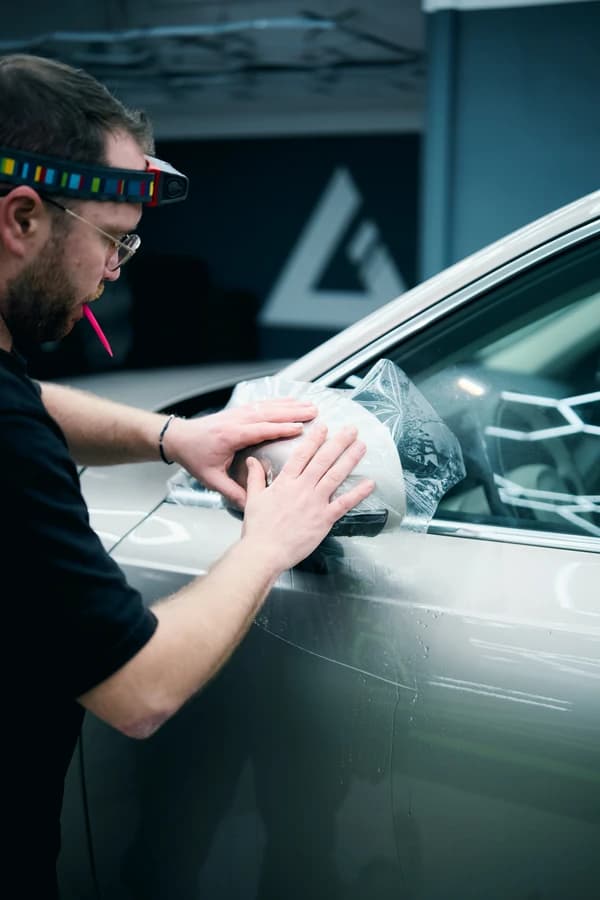
What transparent PPF film is, how it protects paintwork, and how to care for it in Warsaw conditions. A practical guide for daily-driven and highway cars.
Quick Summary
Key Takeaways
Reading time
7 min read
Location
Warsaw
- •Transparent PPF film in Warsaw (quick summary)
- •What is transparent PPF film and how is it built?
- •Why is transparent PPF especially useful in Warsaw?
- •What film thickness is considered normal?
Transparent PPF film in Warsaw (quick summary)
- Transparent PPF makes sense if you want to protect factory paint from stone chips, sandblasting, and daily micro-scratches without changing the look of the car.
- It is especially practical in Warsaw, where paintwork regularly deals with winter salt, sand, road chemicals, traffic wear, and frequent washing.
- Film thickness matters, but the number alone is not enough: top coat quality, adhesive behaviour, and installation standard are just as important.
- Self-healing helps with light surface marks, but it does not repair deep cuts or major mechanical damage.
- Fast decision: if you need a physical barrier between paint and the road, choose PPF in Warsaw; if your priority is mainly gloss and easier maintenance, ceramic coating alone may be enough.
What is transparent PPF film and how is it built?
PPF, or Paint Protection Film, is a protective layer applied over vehicle paintwork to reduce the risk of stone chips, micro-damage, and accelerated surface wear. In practical terms, a good transparent PPF film consists of several layers: a top layer designed for surface durability, a polyurethane or TPU core, and an adhesive layer responsible for correct bonding to the paint.
That multi-layer structure is what makes PPF different from purely chemical protection. The film is there to absorb part of the impact and abrasion so that the paint underneath does not take the damage first. If you are still deciding how much protection you actually need, start with PPF Full Front - what the package includes, because it shows which areas usually matter most.
Why is transparent PPF especially useful in Warsaw?
In a large city, paintwork collects small impacts and signs of wear every single day. In winter, there is road salt, sand, and de-icing chemistry. In warmer months, there are insects, UV exposure, and more frequent washing. Add tight parking spaces, urban traffic, and regular highway runs on roads such as S8 or A2, and the front end of the car ends up carrying the highest share of mechanical abuse.
That is why transparent PPF makes particular sense for new cars, dark paint colours, vehicles with delicate paint systems, and cars that are meant to stay in strong cosmetic condition for years. It is not a styling accessory. It is a practical paint-preservation layer.
What film thickness is considered normal?
One of the most commonly discussed specifications is film thickness. Premium manufacturers often list values around 7-8 mil, which translates to roughly 180-200 microns for the film itself. That does not mean a thicker film is automatically better. Real-world performance also depends on the top coat, adhesive stability, and the consistency of the installation process.
| Parameter | Reasonable reference point | What it means in practice |
|---|---|---|
| Film thickness | Around 7-8 mil | A solid level of physical protection in the premium segment |
| Top layer | Self-healing / clear coat | Better resistance to light wash marks and surface marring |
| Adhesive | Stable PSA system | Affects edge quality, fitment, and future removal behaviour |
| Installation | Dust-free and without overstretching | Often more important than the marketing language on the box |
How does self-healing work and where are its limits?
Self-healing does not mean the film can fix every kind of damage. What it means is that the top layer can reduce the visibility of very light surface marks when exposed to heat. In real use, that usually means minor wash marring or superficial marks can fade or disappear over time.
- It works well for light surface-level marks and very fine scratches.
- It does not solve deep cuts or serious film damage.
- It does not replace correct washing habits and gentle maintenance chemistry.
That is why a technically honest PPF consultation should never stop at the phrase “it heals itself”. The important part is explaining what kind of damage it can realistically reduce and what still requires repair or replacement.
What transparent PPF does, and what it does not do
A good PPF film offers real protection, but expectations still need to stay realistic. It reduces the likelihood of common stone chips, takes a share of daily abrasion, and helps preserve the paint in more stable condition. It does not make the vehicle immune to everything, and it does not correct defects that are already present in the paint.
| PPF helps against | PPF does not replace |
|---|---|
| Stone chips from small road debris | Body and paint repair after heavy impact |
| Light scratching and abrasion | Removal of deep scratches already in the paint |
| Salt, sand, insects, and road chemistry | Protection against dents and major panel deformation |
| Daily wear in city and highway use | Regular washing and correct maintenance |
How should transparent PPF be maintained without common mistakes?
PPF maintenance should be consistent and gentle. Wet washing, soft wash media, and chemistry without aggressive solvents are the safest baseline. If the surface gets heavily soiled, it should not be “rescued” with dry wiping or random abrasive compounds.
- Use gentle wet washing and careful drying.
- Avoid aggressive solvents, harsh polishing compounds, and unknown chemistry.
- Stay with mild products in the pH 6-8 range unless the film manufacturer states otherwise.
- Do not postpone removing salt, tar, and insect remains, especially after winter or motorway driving.
If you want to understand more broadly when a physical film is the better answer and when a coating may be enough, also read PPF vs ceramic coating.
Who benefits most from transparent PPF?
The biggest gains usually go to owners of new or freshly corrected cars who want to preserve the current condition of the paint for longer. Transparent PPF also makes strong sense for daily-driven vehicles that face city traffic, outdoor parking, and regular highway use. A third common scenario is any car where paint condition directly affects resale value.
If the budget does not justify a full wrap, the rational starting point is the impact zone package: bumper, hood, front wings, headlights, mirrors, and exposed edges. That usually delivers the best return on the protection budget.
Where should you have transparent PPF installed in Warsaw?
If you are looking for PPF in Warsaw without marketing shortcuts, begin with the paint condition and the real usage scenario of the vehicle. At One Way Detailing, we treat PPF as a technical service: we assess the car first, recommend the right coverage second, and only then move into installation and aftercare guidance.
We work in Warsaw from our Białołęka studio at Odlewnicza 4. Booking and consultation: +48 577 88 99 19, oneway.warszawa@gmail.com. If you want a quick first assessment, the easiest start is usually a few photos of the car.
Article topics