

PPF in Warsaw: Which Areas to Wrap, How Long It Lasts, and Warranty Basics
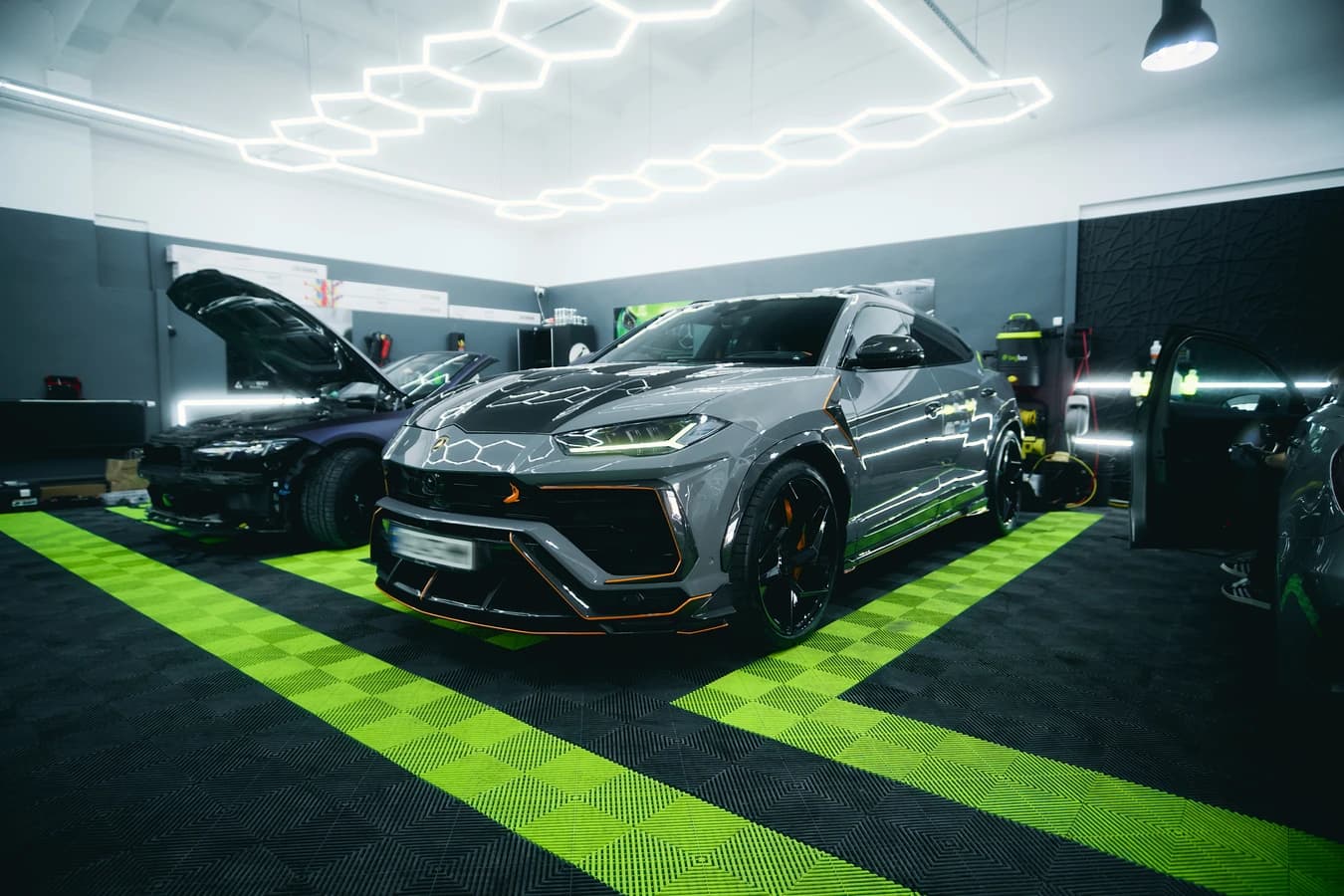
Which parts of the car are worth protecting with PPF, how long the film realistically lasts, and what a warranty actually covers. A practical Warsaw guide for car owners.
Quick Summary
Key Takeaways
Reading time
7 min read
Location
Warsaw
- •PPF in Warsaw: areas, lifespan, and warranty (quick answer)
- •Which parts of the car are worth wrapping first?
- •When is Full Front enough, and when does full body make more sense?
- •How long does PPF really last in Warsaw?
PPF in Warsaw: areas, lifespan, and warranty (quick answer)
- The first areas to protect are impact zones: bumper, hood, front wings, headlights, mirrors, pillars, and edges, because these are the surfaces that collect chips and sandblasting first.
- Full Front is usually the most rational package, because it protects the real risk zone without the budget of a full body wrap.
- PPF lifespan depends not only on the film brand, but also on paint preparation, driving conditions, washing habits, and installation quality.
- A material warranty and an installation warranty are not the same thing, so the customer should understand the difference before booking the job.
- Fast decision: if you want practical protection for everyday driving, start with Full Front; if maximum preservation of the entire paint finish matters most, discuss a full body wrap.
Which parts of the car are worth wrapping first?
If you ignore the marketing language and look at real damage patterns, the logic is simple: the first panels to protect are the ones that take the strongest stream of road debris and friction. In Warsaw, that becomes especially obvious after winter and after regular highway driving, when the front of the car collects sand, salt, and fine gravel from the road surface.
That is why a proper PPF consultation should not begin with “full wrap or nothing”, but with identifying the actual risk zones. For most cars, that means:
- Front bumper - one of the hardest-hit parts in city and highway use.
- Hood - the main stone-chip zone at higher speed.
- Front wings - exposed to sandblasting and debris thrown up by tyres.
- Headlights - vulnerable to pitting, hazing, and road chemistry.
- Mirrors, pillars, edges, and handle recesses - small but constantly exposed areas.
If you want to see how a rational starter package is usually built, read PPF Full Front - what the package includes. It shows clearly why protecting only the hood is often not enough.
When is Full Front enough, and when does full body make more sense?
Full Front is considered the most rational scenario not because it is easy to sell, but because it covers the biggest share of real everyday risk. For a vehicle that sees Warsaw traffic, occasional motorway use, and normal parking situations, that package usually absorbs most of the chips and abrasion that would otherwise hit the paint directly.
| Scenario | Usually the sensible choice | Why |
|---|---|---|
| Daily car, city + motorway | Full Front | Best balance between budget and real protection of high-risk panels |
| New premium vehicle | Full Front or full body | Maximum preservation of original paint often matters more |
| Rare paint finish or collector interest | Full body | The cost of repainting or losing originality is higher |
| Limited budget | Selected impact areas | Better to protect the front properly than wrap everything superficially |
A full body wrap becomes logical when the goal is not only front-end protection, but preserving the entire vehicle as evenly as possible: sills, doors, rear arches, loading zones, and all the other parts that wear in real use. If budget is limited, however, a well-executed Full Front usually delivers more value than a shallow attempt to “cover everything a little”.
How long does PPF really last in Warsaw?
There is no honest single-number answer to PPF lifespan. Premium manufacturers may advertise long warranty periods, but that does not mean every film on every car will look identical for the same amount of time. In practice, longevity depends on the film itself, the paint condition underneath, local climate, washing methods, road exposure, and how the car is stored.
- It lasts longer when a quality film is installed over properly prepared original paint and maintained correctly.
- It ages faster when exposed to harsh chemistry, poor washing technique, constant motorway abuse, or unstable repainted panels.
- It is important to separate visual lifespan from the formal warranty period.
In Warsaw, winter conditions, road salt, and heavy daily use are especially relevant. That is why clear aftercare guidance matters almost as much as the warranty statement itself.
What does a PPF warranty mean in real terms?
One of the most common mistakes is assuming that a PPF warranty covers everything without limitation. At One Way Detailing, we provide a 7-year warranty on the PPF we install, but every warranty still depends on specific use conditions and clear limits of responsibility.
Manufacturer warranty
This usually concerns defects in the material itself, such as yellowing, cracking, delamination, or problems with the top layer, as long as the film has been used as intended.
Studio warranty
From the installer side, the warranty concerns workmanship: correct fitting, edge quality, absence of unjustified application defects, and compliance with installation standards. At the same time, the original paint condition, previous repairs, maintenance habits, and mechanical damage unrelated to the installation still matter.
That is why a good PPF consultation should not end with price alone. It should also explain exactly what the 7-year warranty covers and which situations count as warranty claims. That matters more than a generic promise of “long warranty”.
Is there a risk when wrapping repainted panels?
Yes, and it should be discussed openly. PPF performs best over stable original paint or over a properly cured and correctly executed repaint. If a panel was painted poorly, has weak adhesion, or was not prepared properly, the risks in later use and eventual film removal are higher.
That does not mean PPF cannot be installed on repainted panels. It means a professional studio should assess the surface first and explain the risks honestly instead of selling a package without inspection.
What if the film changes the vehicle colour?
With transparent PPF, this is usually not a concern because the dominant colour of the car stays the same. If you choose a matte, satin, or otherwise appearance-changing film, it is worth confirming local registration requirements in advance. That becomes a legal and administrative question, not just a detailing one.
If you are considering visual transformation rather than pure preservation, read our guide to matte and gloss PPF. If you want the broader technical background first, continue with transparent PPF and paint protection.
How do you choose a PPF package without overspending?
- Step 1: identify where the car really takes damage.
- Step 2: decide whether your priority is front-end protection or preserving the whole body.
- Step 3: verify the film, the warranty terms, and the installation quality, not just the price.
- Step 4: discuss aftercare in advance, because that directly affects long-term film performance.
The wrong approach is to buy the cheapest package without asking about film grade, paint preparation, edge work, or warranty terms. The right approach is to treat PPF as a long-term investment in the condition of the vehicle.
Where can you discuss PPF in Warsaw?
At One Way Detailing, we help clients choose not just the film itself, but the right protection scope for the actual car and how it is used. If needed, we start with paint inspection, explain Full Front versus full body, and go through warranty limits and repainted-panel risks in practical terms.
We work in Warsaw from our Białołęka studio at Odlewnicza 4. Booking and consultation: +48 577 88 99 19, oneway.warszawa@gmail.com. In many cases, a few good photos of the vehicle are enough to start the discussion sensibly.
Article topics