

How to wash a car with PPF: a safe step-by-step routine
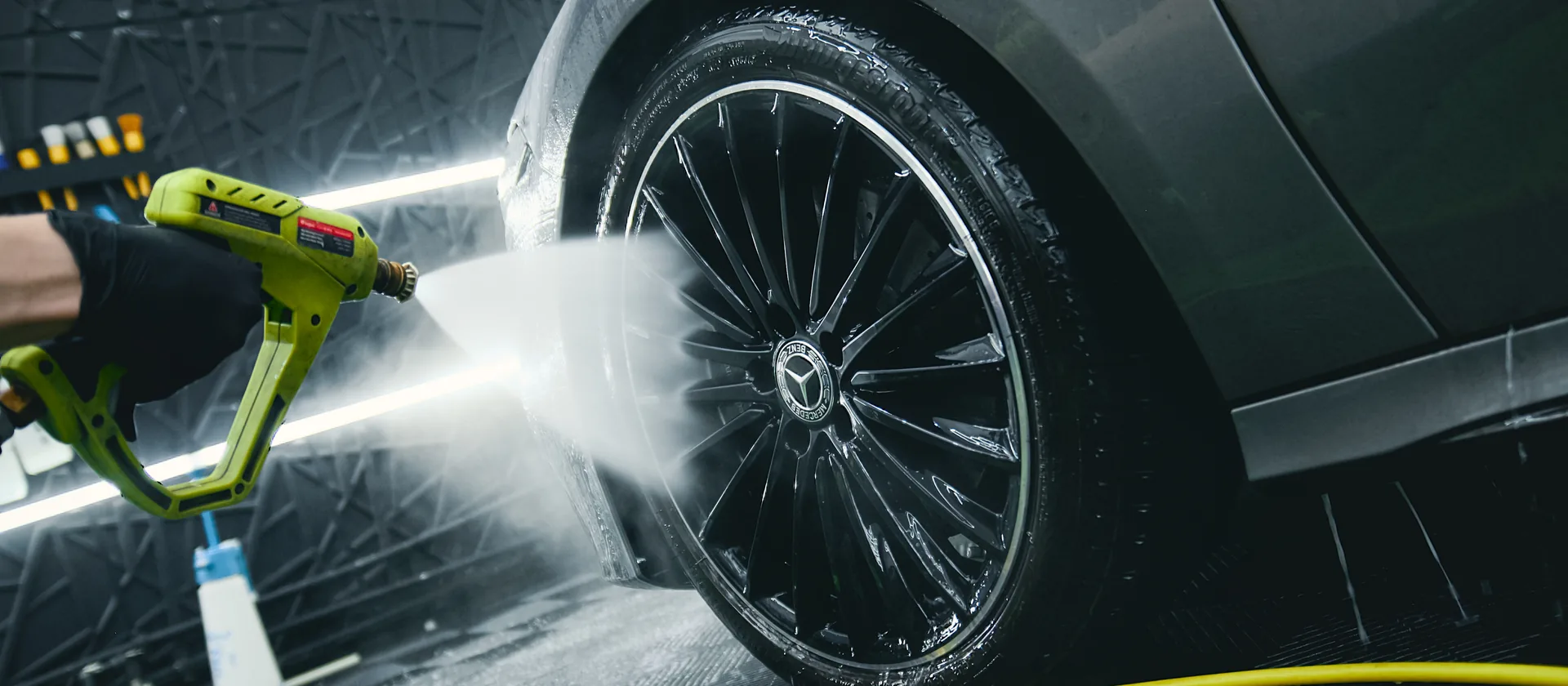
A practical guide to washing a PPF-protected car: the first wash, hand and touchless washing, safe products, bugs, winter grime and film-edge checks.
Quick Summary
Key Takeaways
Reading time
11 min read
Location
Warsaw
- •How should you wash a car with PPF? The short answer
- •When can you wash a car after PPF installation?
- •How do you hand-wash a PPF-protected car?
- •1. Let the car cool and prepare separate clean tools
How should you wash a car with PPF? The short answer
The safest routine is a careful hand wash on cool bodywork, after a thorough pre-rinse, using a clean and soft wash mitt. Never rub dry dirt across the film. Keep pressure-washer spray away from exposed edges, skip automatic brush washes, and remove bugs, bird residue, tree sap and winter road grime before they have time to harden.
There is one important qualification: PPF is a category, not a single identical product. Films can have different top coats, finishes and care requirements. The aftercare sheet for the material installed on your car therefore takes priority over a generic internet checklist. This guide gives you a conservative routine that applies broadly, while also pointing out the decisions that must be based on the actual film.
When can you wash a car after PPF installation?
The adhesive and film edges need an initial settling period. Manufacturers do not all specify the same interval. Official 3M care guidance says to wait at least 72 hours, and the LLumar PPF FAQ also recommends 72 hours. Some XPEL instructions state 48 hours for selected products. Those differences are precisely why the name of the film and the installer’s handover advice matter.
If you do not know what was installed, ask the studio before the first wash. During the settling period, do not press damp edges down yourself, pierce small moisture pockets, or use a heat gun to accelerate the process. A fresh application can change in appearance as installation moisture dissipates, and the installer is the right person to decide whether a mark needs attention.
How do you hand-wash a PPF-protected car?
Safe washing is less about buying an elaborate shelf of chemicals and more about controlling friction. Sand dragged across a panel can mark both paint and film. The same routine works whether the car has a Full Front PPF package or complete body coverage.
1. Let the car cool and prepare separate clean tools
Work in the shade and wait for hot panels to cool. Shampoo and water dry too quickly on a hot surface, leaving deposits and reducing the product’s working time. Prepare a soft wash mitt, a clean drying towel and separate tools for the wheels and lower body. A mitt that has just cleaned a sill or wheel should not go back onto the bonnet.
2. Remove loose contamination before touching the film
Rinse from top to bottom or use a mild pre-wash that is compatible with the film. The aim is to float away dust, sand and mud before the contact stage. Do not move the nozzle close to film edges, corners, badge cut-outs or seams. More pressure at a vulnerable edge is not the same as better cleaning.
3. Wash one section at a time
Use a shampoo approved by the film manufacturer or installer and follow its dilution instructions. A two-bucket method remains practical: one bucket holds the wash solution and the other clean water for rinsing the mitt. Use light, straight passes rather than heavy circular scrubbing. Clean the roof, glass and upper door sections before the bumpers, sills and rear of the vehicle, where the heaviest grime usually accumulates.
4. Rinse completely and dry the surface
Do not let shampoo residue dry on the film. After the final rinse, dry the car with a soft towel or suitable air blower. Avoid wiping a panel if dust is still present. Drying limits mineral spotting and creates a useful inspection moment: you can spot an edge that has lifted, a stain that remains, or a section that needs professional attention.
Can you use a self-service touchless wash on PPF?
Yes, a touchless bay can be useful once the film has completed its specified settling period, provided you control the lance carefully. Do not use the shared wash brush. It may contain grit collected from the wheels and lower panels of many previous vehicles.
Keep the nozzle at a safe distance, direct the spray as close to perpendicular to the panel as practical, and never aim water underneath a film edge. Exact pressure, water-temperature and distance limits are product-specific. For example, 3M publishes detailed pressure-washing limits for its own films; they should not be copied blindly to an unidentified PPF.
Be cautious with wax or gloss programs when you do not know the chemistry. A product intended to add shine may be unsuitable for a matte finish or for a particular top coat. If the bay does not disclose what a program contains, use the basic wash and rinse stages, then apply any maintenance product later in line with the film’s care sheet.
Is an automatic brush wash safe for paint protection film?
Film manufacturers generally favour hand washing or touchless cleaning. Rotating brushes can create fine marks, dull a finish and catch a film edge. 3M specifically warns that brush washes may scratch the surface and lift the edge. The fact that light marks in some films can self-heal with warmth does not make the material immune to repeated dirty-brush contact.
If you have invested in PPF paint protection, a regular brush wash adds avoidable risk. Self-healing cannot repair a deep cut, a contaminated lifted edge or permanent changes to a matte finish.
Which cleaning products and tools are safe for PPF?
The safest option is a non-abrasive product approved for the film on your car, used at the stated dilution. “pH-neutral” is a sensible starting point, but it is not the whole instruction: dwell time, surface temperature and thorough rinsing also affect safety.
- Choose: a soft wash mitt, clean microfibres, a non-abrasive shampoo and cleaners explicitly compatible with PPF.
- Avoid: household cleaners, improvised solvents, abrasive compounds, hard sponges and brushes.
- Do not mix chemicals: combined products can behave differently and may be harder to rinse safely.
- Never let them bake dry: pre-wash, bug remover and shampoo should not dry on hot film.
Gloss and matte films may need different care. If you are still deciding between finishes, our guide to matte versus gloss PPF explains the practical differences. A random gloss enhancer can leave irregular shiny patches on a matte or satin surface.
How do you remove bugs, bird droppings, sap and tar from PPF?
Act promptly, but do not become aggressive. Never scrape dried contamination with a fingernail or rub it with a dry cloth. Rinse loose dust first, then soften the spot with water and a film-safe cleaner. Let the product work for the period stated on its label, lift the contamination gently, rinse the panel and dry it.
The 3M product-care guide advises prompt removal of bird residue, tar and bugs, and recommends softening stubborn contamination such as tree sap with warm soapy water rather than abrasive scrubbing. If a mark remains, do not simply move to a stronger solvent. Tell the installer what has already been used and let them identify the film and stain first.
How should you care for PPF during a Warsaw winter?
In winter, the issue is not only visible dirt. Moist road salt, sand and traffic film collect behind the wheels, on bumpers and along the sills. A full detailing wash is not required after every drive, but regular, thorough rinsing of those lower areas reduces the time this mixture remains on the surface and around film edges.
Do not attack ice on a wrapped panel with a hard scraper. Allow it to thaw safely and remove the contamination with water. After washing, inspect the edges around wheel arches, sills and bumpers. These areas receive both the most road grime and the most direct pressure-washer attention.
How often should you wash a car with PPF?
There is no single timetable for every car. A garaged city car and a vehicle covering motorway miles every day collect different contamination. Surface condition matters more than a rigid calendar. Remove bugs after a long journey, rinse salt from lower areas more often in winter, and respond promptly to sap or bird residue after parking under trees.
Do not postpone cleaning simply because the whole car still looks acceptable. A localised contaminant can need attention before the rest of the bodywork. Equally, daily contact washing is not a goal in itself. A sensible routine combines prompt, gentle spot cleaning with a complete wash once the vehicle has accumulated enough general road film to justify it.
Does a coating on top of PPF change the washing rules?
A compatible coating or maintenance product can increase water repellency and make dirt easier to remove, but it does not rewrite the basic rules. Brushes remain risky, a dirty towel can still mark the surface, and pressure should still be kept away from edges. A slick surface is not protection against sand trapped in a wash mitt.
Do not assume every product marketed as “ceramic” is suitable for every PPF. The film maker may recommend a particular product type or restrict certain formulas, especially on matte and satin finishes. Before applying a topper, wax or coating, check the film care sheet and confirm that the product is non-abrasive and will not alter the intended appearance.
Can you polish or heat PPF to remove scratches?
Do not treat film like automotive clear coat. Some PPF has a self-healing top layer, but the activation method and tolerance for polishing depend on the specific product. An aggressive compound, excessive temperature or machine work over an edge can permanently damage that top coat.
Check the product instructions and show the defect to the installer first. This matters especially with matte film, deep damage, discolouration or a mark beside an edge. Correct cleaning may be enough; controlled warmth may be approved for a particular film; or replacing one panel of film may be safer. A universal online “fix” is not a substitute for identifying the material.
When should a PPF-protected car go back to the studio?
Arrange an inspection if you notice a lifted edge, cut, persistent stain, unusual haze or a bubble that remains beyond the period described at handover. Do not trim, glue or puncture the film yourself. An edge checked early is easier to assess than one that has collected dirt for several weeks.
When choosing an installer, ask about handover instructions, first-wash timing and the process for follow-up checks. These points are included in our guide to choosing a PPF studio in Warsaw. Aftercare is part of a well-defined service, not an optional extra.
A five-point PPF washing checklist
- After installation, wait for the period specified for the actual film and confirmed by the installer.
- Remove as much loose dirt as possible before a wash mitt touches the surface.
- Wash from top to bottom with clean, soft tools; keep wheel and sill equipment separate.
- Do not direct high pressure under edges, and never use the shared brush in a self-service bay.
- Remove fresh contamination promptly, dry the car and inspect the film edges as you do.
If you are still researching protection, start with our explanation of how PPF works and what affects its cost, then compare Full Front PPF with complete body coverage. One Way Detailing in Warsaw can help match the coverage to how the car is used and explain the correct care routine for the installed material.
Article topics