

Can You Keep Your Car's Paint Gloss for Years?
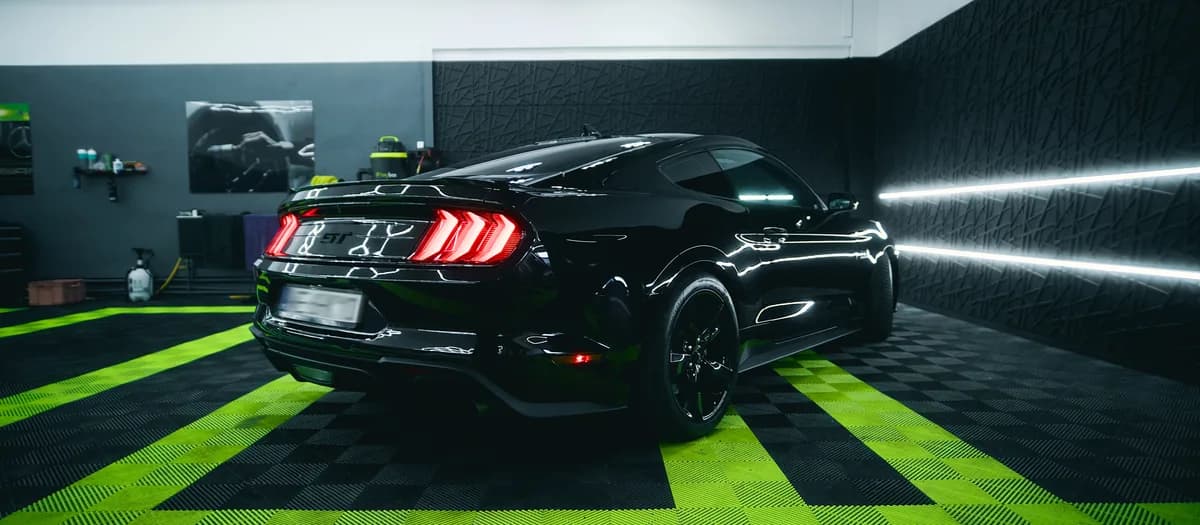
Paint gloss can be preserved for years — but it doesn't happen on its own. Find out what causes paint to go dull and how to protect it effectively: paint correction, ceramic coating, PPF. One Way Detailing Warsaw.
Quick Summary
Key Takeaways
Reading time
7 min read
Location
Warsaw
- •Why New Cars Lose Their Gloss — and What to Do About It
- •Is Regular Washing Enough to Maintain Gloss?
- •Step One: Paint Correction — Restoring Factory Gloss
- •Ceramic Coating — How It Really Protects Gloss for Years
Why New Cars Lose Their Gloss — and What to Do About It
Every new car owner knows that moment: the car fresh from the dealership gleams like a mirror — deep colour, perfect light reflections, the "wet paint" effect. But within a few months the paint starts to go dull, loses its "life" and no longer shines the way it did at the start. This is not a coincidence — it is the natural result of the environment acting on unprotected paint. UV radiation gradually oxidises the pigments and the clearcoat layer. Automatic car washes and improper hand washing leave thousands of microscopic scratches that scatter light instead of reflecting it like a mirror. Road chemicals, salt, metallic brake dust deposits and hard water penetrate the paint surface and cause its degradation. The result is a car that, although clean, looks used — because the paint has lost what makes it beautiful: depth and uniform reflection.
Is Regular Washing Enough to Maintain Gloss?
This is one of the most common myths in car care: that washing the car regularly is enough to keep it looking new. Regular washing is important — dirt, bird droppings and insects are enemies of the paint that must be removed quickly. But washing alone does not protect the paint from degradation. Washing removes contaminants from the surface but creates no protective barrier against UV, chemicals or scratches. Every wash — even a correct, hand wash — leaves micro-scratches if proper technique is not used (two-bucket method, microfibre, correct chemicals). And an automatic car wash is a direct route to hundreds of scratches with every visit. In short: washing is hygiene, not protection. To truly maintain gloss for years you need proper paint protection.
Step One: Paint Correction — Restoring Factory Gloss
If your paint has already lost its gloss — it is dull, has holograms, swirl marks or visible scratches — the first step must be paint correction. This is a machine polishing process that mechanically removes the top layer of clearcoat (just a few micrometres) along with the defects contained in it. The result is paint restored to a deep, factory gloss — often looking better than when the car was purchased. Crucially, paint correction is a prerequisite before applying any long-term protection — ceramic coating or PPF film. Applying ceramic coating to uncorrected paint will seal its defects for years and no subsequent washing or maintenance will remove them. At One Way Detailing we always assess paint condition with a paint thickness gauge and detailing lamp before every project.
Ceramic Coating — How It Really Protects Gloss for Years
Ceramic coating is today the most popular form of long-term paint protection. It creates a hard, glass-like layer on the paint surface that bonds chemically with the clearcoat and does not wash off like ordinary wax. This layer performs several functions simultaneously: it protects against UV (which stops oxidation and colour fading), creates strong hydrophobicity (water and dirt run off by themselves), and provides chemical resistance against acid rain, insects, bird droppings and other aggressive substances. Importantly — ceramic coating significantly deepens gloss. Paint under ceramic looks deeper, more "wet", with more intense light reflections. Premium ceramics (Gtechniq Crystal Serum, Gyeon Q² Mohs+, CarPro Cquartz) maintain these properties for 4–7 years with proper maintenance described in our article on how to care for a car after ceramic coating.
PPF Film — The Highest Level of Physical Paint Protection
Ceramic coating protects against chemicals and UV, but it will not stop a stone chip flying off the motorway. For protection against physical damage — chips, scratches and scuffs — PPF (Paint Protection Film) is the answer. This is a thick polyurethane film that physically absorbs impacts before they reach the paint. Premium films (STEK, Llumar, Suntek) have a self-healing property: minor scratches and swirl marks disappear under the influence of heat from the sun or warm water. Modern PPF films also have a "wet look" effect — they enhance the depth and gloss of the paint rather than dulling it. PPF and ceramic coating are not competing but perfectly complementary — read more in our article PPF vs ceramic coating — which to choose? If you are interested in protecting the front of your car, also check out PPF Full Front — what does it cover?
Common Mistakes That Destroy Gloss — Even on a New Car
Based on hundreds of projects we see the same mistakes that lead to premature gloss loss. An automatic car wash with brushes is the most destructive action for paint — every visit leaves hundreds of micro-scratches. Having no paint protection at all means UV and chemicals act directly on the clearcoat with no barrier whatsoever. Cheap car wash chemicals contain aggressive detergents that strip and damage any wax or ceramic coating. Ignoring water spots — hard water marks, if not removed in time, etch into the paint and require mechanical correction to remove. Skipping regular maintenance after applying ceramic coating — ceramic needs servicing every 6–12 months to maintain its full hydrophobic and protective properties. Even a new car can be "visually destroyed" within 3–6 months with this kind of approach.
A Real Strategy for Maintaining Gloss for Years — Step by Step
Based on several years of working with hundreds of cars we have developed a proven gloss protection strategy. Step 1: paint condition assessment — paint thickness gauge, detailing lamp inspection, swirl mark analysis. Step 2: paint correction if defects are present (scratches, holograms, dullness). Step 3: choosing the right protection — ceramic coating for city cars and used vehicles, PPF plus ceramic for new cars driven on motorways or with finishes susceptible to damage. Step 4: correct washing — by hand, two-bucket method, with appropriate chemicals, no automatic car washes. Step 5: regular detailing maintenance every 6–12 months — ceramic top-up, water spot removal, rubber and plastic care. With this approach paint gloss can be maintained for 5–10 years. It is an investment that pays off — a well-maintained car retains higher value at the point of sale.
Where to Get It Done Properly in Warsaw?
If you are looking for a place that takes comprehensive care of your car's paint — from condition assessment, through correction, to ceramic coating or PPF film application — welcome to One Way Detailing in Warsaw. We work from our Białołęka studio at Odlewnicza 4. Every project is treated individually — we assess paint condition, driving style and budget, and on that basis recommend the best solution. The estimate is free. Contact us by phone, via WhatsApp or book a slot through Booksy — we will advise the best solution for your car and how you use it.
Article topics